Tallahassee — A set of revised statewide curriculum standards approved by the Florida Board of Education on August 29, 2023 has led to weeks of tense discussion across school districts, faculty lounges, community forums, and legislative offices. The standards, intended for implementation in the 2023–24 school year, introduce new guidelines for teaching U.S. history, African American history, and civic education in public schools.
The debate intensified shortly after the standards became public, when teachers began meeting in emergency department sessions to interpret how the rules would affect lesson plans already prepared for the year.
“This is the first time in my twenty years of teaching that I’ve had to rewrite almost a whole semester’s curriculum in less than a week,” said Jennifer McCall, a high school history teacher in Jacksonville. “We spend months planning units, coordinating with colleagues, aligning content. Now everything is in flux.”
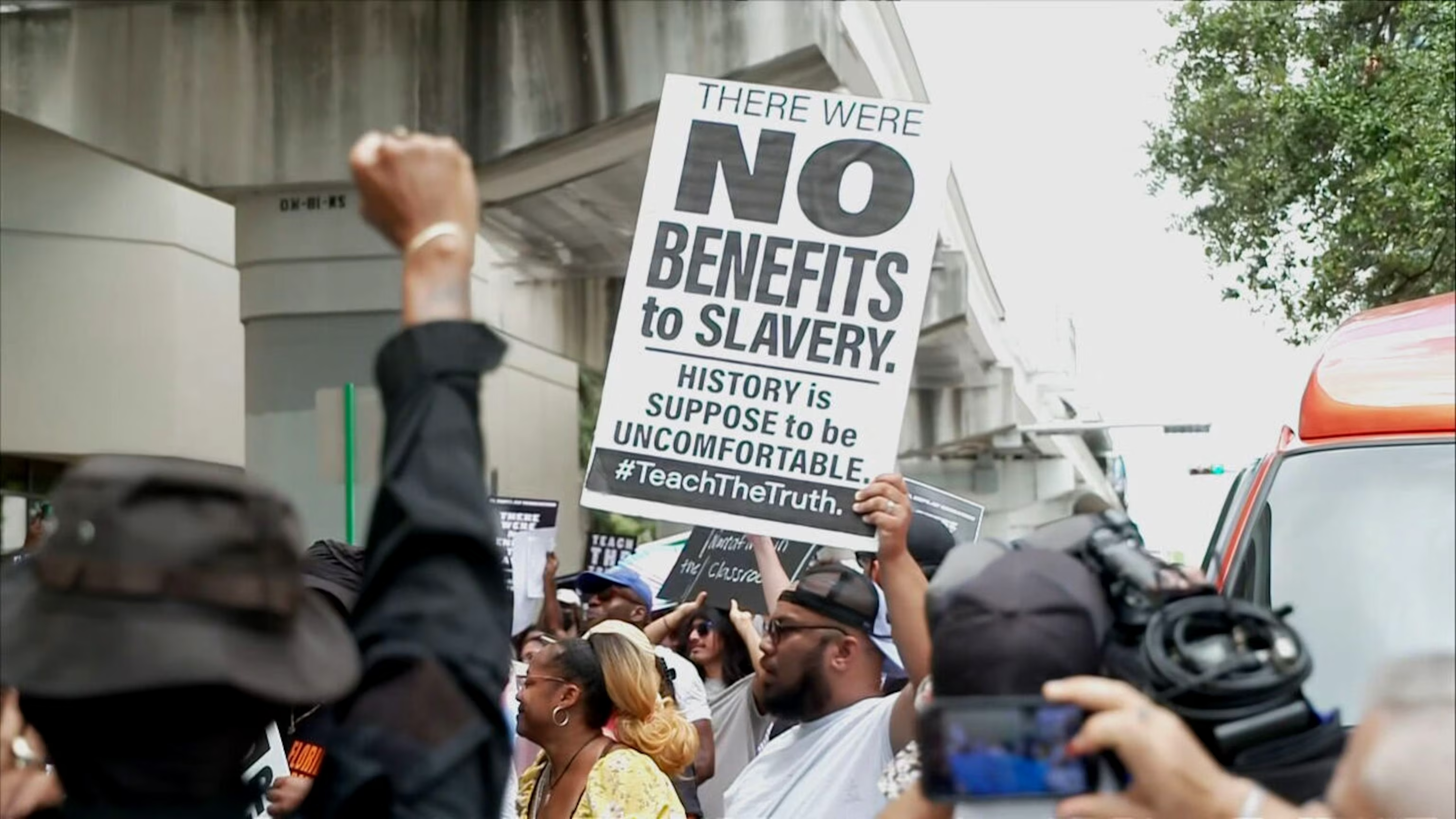
The changes especially drew attention for a section describing how educators should teach the historical relationship between slavery, labor, and skill acquisition. The language, which indicates that enslaved individuals “developed skills that could be applied for personal benefit,” has drawn criticism from educators, parents, and civil rights organizations who argue that it risks minimizing the coercive nature of slavery.

At a public forum held in Orlando, more than 300 residents filled the auditorium to address concerns. Among them was retired professor Harold Simmons, who taught 19th-century American history for decades. Standing at the microphone with a stack of worn textbooks in hand, he said, “There is no historical framework in which forced labor can be framed as a benefit to the person being harmed. We have extensive scholarship. We have primary accounts. We have the words of the enslaved themselves. This is not a topic that needs reinterpretation.”
State officials defended the wording during a press briefing the following day. Florida’s deputy education commissioner, Lisa Hargrove, said the standard was being “mischaracterized in online spaces” and that the intention was to “provide students with a complete and factually grounded understanding of historical skill development.”
“We are not rewriting history,” Hargrove said. “We are expanding students’ understanding of the ways in which skill systems developed across different eras. This standard is part of a broader effort to ensure instruction is coherent, structured, and historically accurate.”
Her explanation, however, did little to quell debate among educators who must navigate the guidelines in real time.
In Miami-Dade County, the third-largest school district in the nation, administrators held back-to-back meetings with department chairs to discuss how to interpret the new requirements. Teachers expressed uncertainty about grading rubrics and whether student assessments might draw scrutiny.
“We’re trying to figure out what’s permissible,” said Daniel Cortez, an eighth-grade civics teacher. “We want to teach honestly, but we’re also trying to make sure we’re not putting our jobs at risk. The ambiguity is what’s causing the most anxiety.”
Parent groups have also entered the discussion, some in support of the new standards and others deeply opposed. At a school board meeting in Pensacola, parents lined up for nearly two hours to deliver comments.
One parent, Michelle Trent, argued that the previous curriculum “pushed ideological narratives” and praised the new guidelines for offering what she described as a “more balanced perspective.”
“Our kids should not be told they must feel guilt or shame based on events they weren’t alive for,” Trent said. “The new standards bring some neutrality back into the classroom.”
Immediately after, Pensacola resident Devin Lewis delivered a sharply different viewpoint. “Neutrality is not the point,” Lewis said. “Accuracy is the point. We’re talking about a system that existed for hundreds of years and shaped every part of American society. Teachers shouldn’t have to sanitize that history.”
Meanwhile, Florida’s legislative leaders have signaled that they expect strict adherence to the new requirements. Several lawmakers stated they anticipate “full compliance,” though they did not specify what enforcement might look like in the coming academic year.
School districts are now in a race against time. Some have formed working groups composed of teachers, scholars, and district officials to create unified lesson plans that interpret the new guidelines in ways they believe are both accurate and compliant. Others have requested additional clarification from the state, though responses have been limited.
Libraries and curriculum centers have begun receiving new instructional materials, including professional development packets that outline teaching scenarios, discussion prompts, and state-approved examples. The materials vary by district, leading many teachers to compare notes with colleagues in other regions.
“We’re text-messaging each other photos of the new worksheets,” said McCall, the Jacksonville teacher. “Someone in Broward County gets one set, someone in Duval gets another. There’s not a consistent approach yet.”
Students returning to school have already noticed changes in their classroom environments. Several teachers have removed posters, primary-source excerpts, and historical documents until they know whether they align with the new standards. Some bulletin boards that once featured timelines or civil rights movement photographs are now blank.
Districts are preparing to gather feedback from teachers after the first quarter of instruction. Many districts have planned surveys, listening sessions, and mid-year curriculum audits to understand how effectively the standards are being implemented.
The discussion continues to evolve at the state and district levels, with lawmakers, educators, parents, and historians closely watching the first weeks of classroom instruction under the new rules.