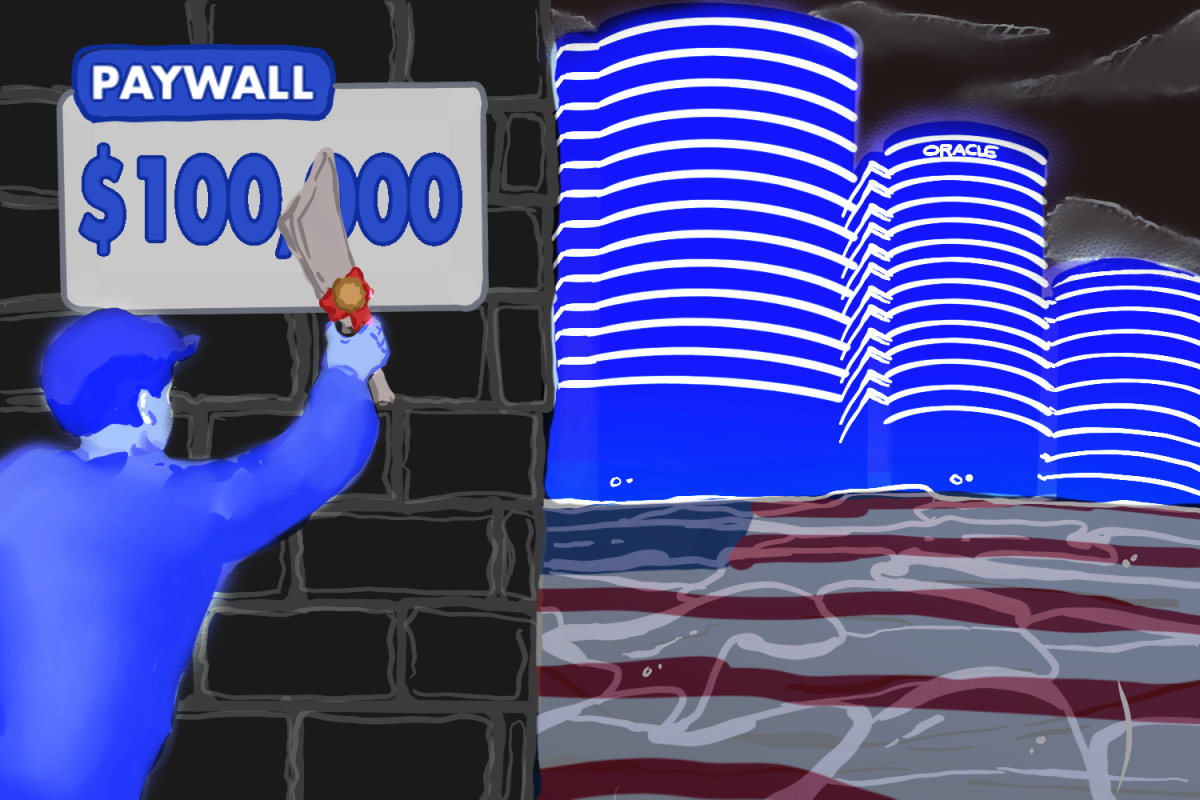
Though changes to the Free Application for Federal Student Aid (FAFSA) were meant to simplify the process for receiving post-secondary financial aid, its delays—due to system-related glitches—have seemed to cause the adverse effect.

In previous years, the FAFSA annually opened on Oct. 1. This year’s application cycle, the 2024-2025 FAFSA, was projected to open in December 2023; however, the application did not open until Jan. 1, 2024. Even then, the FAFSA was only available for use in brief, unspecified periods until a certain point.
Regardless of application submission beginning in January, the FAFSA did not begin to process applications until February 2024, further delaying students from knowing how much higher education will cost—information which many students and families regard as the most crucial criterion for enrolling or continuing to enroll in a post-secondary school.
“It was just frustrating to get FAFSA done since it was too unreliable,” says Albert Zhang, a Innovation Academy Graduate and current student at University of Pennsylvania. “I’m also worried about how the changes they’ve been making lately might lead to less aid being given to low-income families.”
Before another delay to late April 2024, the FAFSA claimed they would relay opportunities about federal loans, grants and work-study prospects in March, which is a prominent time for college applicants to receive their admissions decisions. This year is the first national admissions cycle where students did not receive an exact financial aid package with their acceptance letters.
Without knowing the official costs, some high school seniors are settling for an in-state college choice, assuming their out-of-state choices will be more costly without specific financial aid offers.
“I can’t commit to my top choice school, which is out-of-state, because I’m not sure of how much aid I will receive for it to be affordable,” says Akarsh Kudrimoti (SR). “Instead, I am settling for an in-state choice until I receive my aid information.”
Currently, for FAFSA forms that have been processed, students and families have been given a Student Aid Index (SAI), which determines federal financial aid eligibility on a range of –1,500 to 999,999, with a lower SAI indicating greater financial need. Nonetheless, because there is no prior use of this index, families cannot use the SAI to estimate their potential aid for post-secondary education.
Even with delays in the FAFSA, many institutions have used the College Scholarship Service (CSS) Profile, provided by the College Board, to estimate first-year students’ expected family contributions for tuition alongside room and board fees. With commitment deadlines approaching, the CSS Profile has become a preeminent indicator of many schools’ costs.
In addition, several universities are extending their first-year and transfer student enrollment deadlines to accommodate the delays in FAFSA.
Notably, the University of Georgia and Georgia Institute of Technology have extended their commitment deadline to May 15, and other universities, such as Auburn University and Rutgers University have given students until June 1 to enroll.
Still, many top institutions, such as Georgetown University and Florida State University, are keeping their commitment deadlines on May 1, hastening students to decide their future without knowing its cost.
With the FAFSA’s unpredictable nature during 2024-2025 cycle, it is certain that its delays have caused uncertainty and setbacks for the future among high school and college students alike.