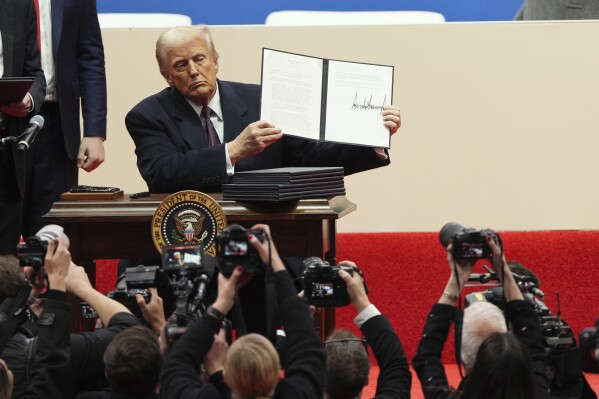
On January 20, 2025, Donald J. Trump was sworn in as the 47th President of the United States at the United States Capitol in Washington. The inauguration was followed by a flurry of executive actions and pardons that immediately signaled a sharp turn in federal policy and governance.
Within hours of taking the oath, Trump signed a series of executive orders that effectively reversed many of his predecessor’s policies, including a broad “regulatory freeze” and a hiring pause across large swathes of federal agencies. According to reporting, White House officials described the freeze as necessary “to ensure efficient, accountable government” while the new administration reassessed regulations.

Most controversially, Trump granted full pardons to roughly 1,500 individuals convicted for their involvement in the events of January 6, 2021. Among those pardoned were individuals convicted of assaulting police officers and other serious offenses related to the Capitol attack. Trump defended the pardons in remarks after the ceremony, arguing that continuing prosecutions would “keep the country divided” and that many supporters had been treated unfairly.
The pardons and rapid policy shifts ignited immediate backlash from Democratic lawmakers and some members of law enforcement. Nancy Pelosi, former House Speaker, criticized the decision, saying it “undermines rule of law and betrays the victims” of the Capitol violence. Other critics warned that pardoning convicted rioters could embolden political violence and weaken accountability for serious crimes.
Meanwhile, Trump’s supporters celebrated the moves. At a rally later in the day, a campaign aide said the pardons were “long overdue” and that Trump had kept his promise to protect those the administration views as political prisoners. The swift rescinding of prior administration policies was described by allies as a reset — a way to reassert executive power and reorient government priorities from their first moments back in office.
Beyond pardons and executive orders, the new administration also began revoking numerous regulations related to environmental policy, labor, and federal oversight, including several that had been implemented only months earlier. Federal employees were ordered to return to full‑time, in-office work, ending many remote work flexibilities introduced in prior years. According to some agency heads, the transition was chaotic, with many staffers still waiting for new guidance even as orders went into effect.
Civil society organizations and advocacy groups voiced alarm at the changes. A spokesperson for one national civil rights alliance said the pardons “send a dangerous message: violence against institutions comes with protection, not punishment.” Meanwhile labor unions and progressive groups warned that the rollback of regulations and hiring freezes would hurt public services and workers’ rights.
The new administration’s supporters hailed the day as the start of a new era. Critics, however, warned that the rush to undo prior policies and shield convicted rioters could deepen polarization and and trigger legal and social unrest. For many Americans the question remained: would the 2025 White House be a reset button? Or a turning point with long‑lasting consequences for our democracy?