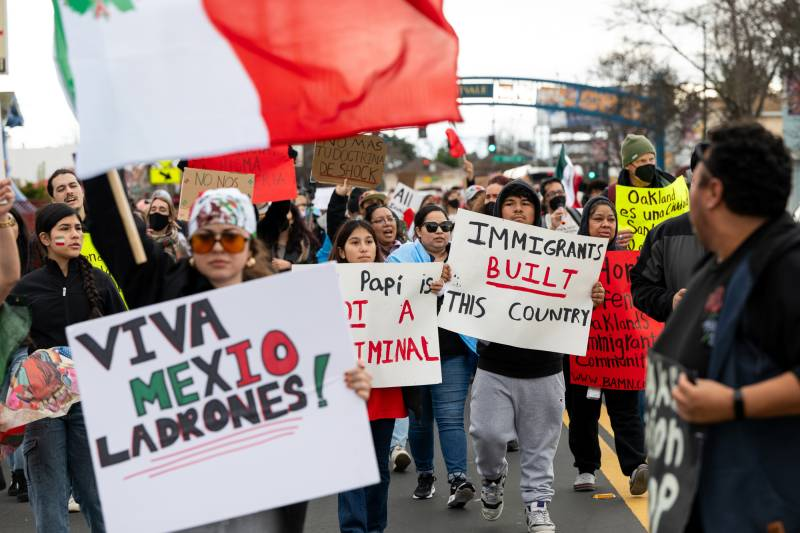
Across the United States on Monday, February 3, 2025, businesses closed, streets emptied, and thousands of people stayed home from work or school in solidarity with a nationwide protest dubbed A Day Without Immigrants. The action was organized to draw attention to recent aggressive immigration policies enacted by the federal government under President Donald J. Trump.
In cities from Los Angeles to Chicago, San Diego to Aurora, Colorado, restaurant owners, day‑care operators, small businesses, and many working people shut their doors for the day. At a small restaurant in Chicago’s Pilsen neighborhood, owner Andrea Toro taped a “Closed” sign on the door in protest. She told a local reporter that “we are standing with immigrants and showing what it would be like if they weren’t here.”

In Los Angeles, the mood was tense but resolute. Thousands marched in downtown L.A., waving Mexican and U.S. flags and carrying signs that read “Nobody is illegal.” In some places protesters blocked traffic, including a temporary closure of a section of the 101 Freeway. While police initially monitored the march, no mass arrests were reported that evening.
In Denver suburb Aurora, the popular local taqueria Casa Vallarta closed for the day. Its employee, Teresa Barajas, told a journalist: “We don’t want people judging us or our community harshly. Immigrants built this business and without them the support is gone.”
The protest was billed as a demonstration of how deeply immigrants are woven into the American economy and everyday life. As one organizer said ahead of the event: “Today we show the country that without immigrants this nation does not run.”
For many immigrants, both legal and undocumented, the day was also about fear and uncertainty. In multiple states, recent enforcement efforts by federal agencies had stirred panic among immigrant communities. The protest came as a growing rejection of what critics call mass‑deportation policies and sweeping restrictions on immigrant rights.
While participation varied by city and industry as some small businesses said they could not afford to close, the symbolic impact was palpable. News reports estimated that hundreds of businesses participated nationwide, including restaurants, small retailers, and service‑based companies.
As night fell on February 3, many participants expressed a mix of relief, anger, and resolve. One immigrant worker in Los Angeles, who asked not to give his full name, said: “They treat us like we are invisible until they need us. Today they saw we matter.” Meanwhile organizers said this could be the start of a broader movement against policies they view as targeting vulnerable populations.
Whether the protest delivers long‑term political consequences remains uncertain. For now, February 2025 will likely be remembered by many as the day America paused, if only for 24 hours, to reckon with immigration, labor, and belonging.