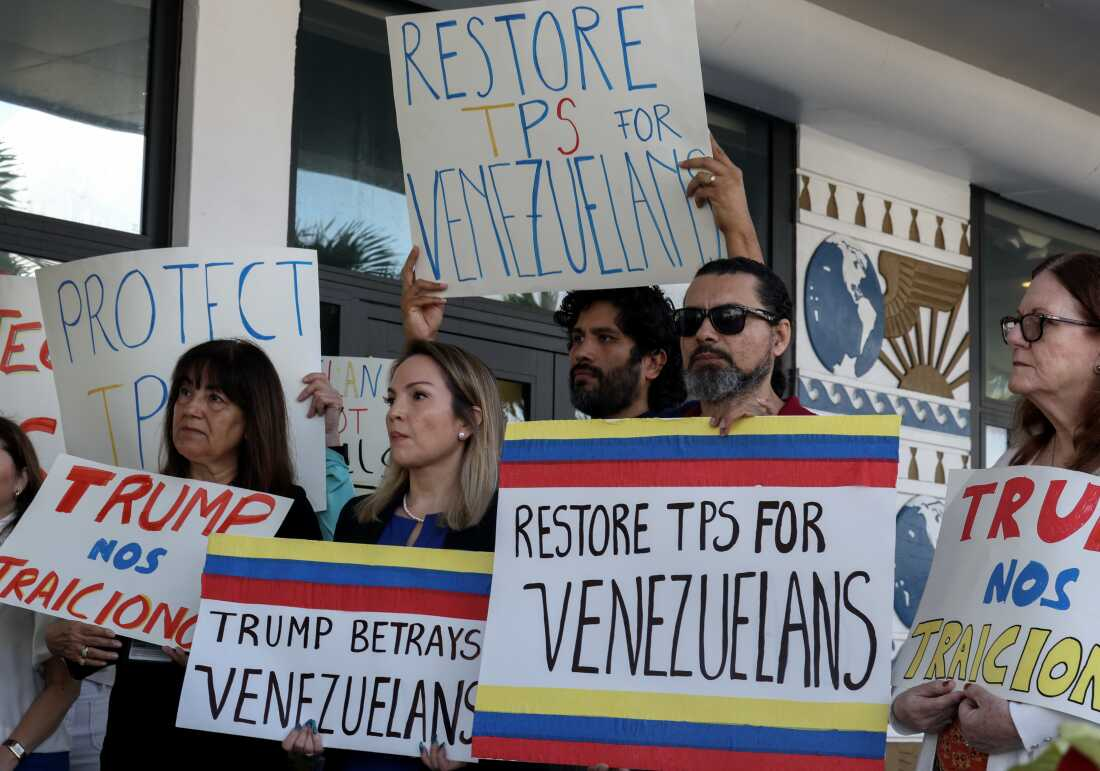
On May 30, 2025, the Supreme Court of the United States (SCOTUS) cleared the way for the Department of Homeland Security (DHS) under the Donald J. Trump administration to revoke temporary protected-status (TPS) and humanitarian parole for hundreds of thousands of Venezuelan immigrants living in the U.S. The decision triggered shock, fear and immediate mobilization among immigrant communities nationwide.

The status change stems from a February order by DHS Secretary Kristi Noem that ended protections first granted during the previous administration. The revoked protections applied to hundreds of thousands of Venezuelans, who had been living and working legally under TPS or humanitarian parole. Critics of the administration warned that ending those protections could lead to “rapid removal,” loss of work authorization, and serious disruption for immigrant families.
In immediately dissenting remarks, Ketanji Brown Jackson, one of the Court’s liberal justices, wrote that the majority’s decision “undervalues the devastating consequences” for individuals whose lives, jobs and families may be upended.
In Washington, the reaction was swift and polarized. DHS praised the ruling. An agency spokesperson told reporters the decision was “a win for the American people and the safety of our communities,” arguing the government was restoring proper immigration control.
But immigrant-rights groups, legal advocates, and many members of Congress condemned the decision. Pramila Jayapal, ranking member of the House immigration subcommittee, called the move “shameful,” saying it abandons people who “fled violence and persecution and built lives in America.”
Within immigrant communities the fear was palpable. Venezuelan homeowners, workers, and students, some with U.S.-born children, told local news outlets the ruling threatened to shatter the stability they had built. One immigrant, speaking on condition of anonymity, said “We came here to survive. Now suddenly we live with a countdown.”
Legal experts warned the decision could have harsh consequences. According to ©World Oxfam Foundation (WOLA), termination of TPS for Venezuelans could lead to tens of thousands losing their right to work legally in the U.S., with ripple effects on housing, education, and community stability, especially in states with high Venezuelan populations.
In the weeks ahead, activists announced plans for rallies, legal challenges, and calls for congressional legislation to restore protections. Some argued that the vote ignored not just humanitarian obligations but also the economic contributions of established immigrant communities, whose work and tax payments, as documented by studies, supported public services and local economies.